Radon in Boone, Blowing Rock, Banner Elk, West Jefferson and the NC High Country – Why Testing Matters in Our Mountain Homes
Living in the stunning High Country of North Carolina—Boone, Blowing Rock, Banner Elk, West Jefferson, Beech Mountain, and surrounding areas—comes with breathtaking views, crisp air, and a peaceful lifestyle. But beneath the surface lies an invisible risk: radon gas.
As a radon-certified home inspector serving the Boone NC area and the broader High Country, I’ve seen firsthand how common elevated radon levels are in our mountain homes. This naturally occurring radioactive gas is the leading environmental cause of lung cancer in the U.S., second only to smoking, according to the EPA. The good news? It’s easy to test for and, if needed, mitigate.
What Is Radon and How Does It Enter Homes in Boone, Blowing Rock, Banner Elk, West Jefferson and the NC High Country
Radon is a colorless, odorless gas produced from the natural decay of uranium in soil, rock, and water. It seeps into homes through cracks in foundations, crawl spaces, sump pumps, floor drains, and other openings—especially in areas with rocky, granitic geology like ours in the Blue Ridge Mountains.
In the High Country, our mountainous terrain and underlying rock types (often granites and metavolcanics) create ideal conditions for higher radon potential. Unlike flatter regions, our homes often have basements, crawl spaces, or exposed soil that allow radon to accumulate indoors, particularly during colder months when windows stay closed.
Radon Risks in Boone, Blowing Rock, Banner Elk, West Jefferson and the NC High Country and Watauga County
North Carolina’s western counties, including those in the High Country, show some of the state’s highest radon potential:
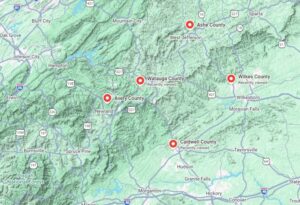
- The EPA designates many western NC counties (including Watauga, Ashe, Avery, and nearby areas) as Zone 1—the highest potential for elevated indoor radon levels (predicted averages >4 pCi/L).
- State data from the NC Department of Health and Human Services (NCDHHS) and testing companies show Watauga County with some of the highest recorded levels in NC, including tests well above 4 pCi/L (with extremes reported up to hundreds in isolated cases).
- Average indoor levels in Watauga County have been reported around 5.9 pCi/L in some datasets—well above the EPA’s action level of 4 pCi/L.
- User-submitted data for Boone homes averages around 16.5 pCi/L in some reports, highlighting the real risk in our area.
The EPA estimates radon contributes to about 21,000 lung cancer deaths annually nationwide. In high-risk zones like ours, the combination of mountain geology and home construction styles (e.g., crawl spaces common in the High Country) increases exposure potential.
Even non-smokers face risks—radon is especially dangerous when combined with tobacco smoke.
Why Every High Country Home Should Be Tested
The EPA and NC Radon Program recommend testing every home, regardless of age or location—no matter the zone on the map. Predictions are just that; actual levels vary by specific property.
- Short-term testing (2-7 days) uses devices like continuous radon monitors for quick, accurate results—ideal during real estate transactions.
- Long-term testing (90+ days) gives the most reliable year-round average.
As a certified radon professional, I use reliable equipment to ensure precise measurements during home inspections.
Testing is inexpensive, non-invasive, and provides peace of mind. If levels are 4 pCi/L or higher, mitigation (like sub-slab depressurization systems) can reduce them by up to 99%—often for a cost comparable to other home improvements.
Signs Your Boone-Area Home Might Need Radon Testing
- You’re buying or selling a home in Boone, Blowing Rock, or nearby.
- Your property has a basement, crawl space, or well water (radon can dissolve in groundwater too).
- You spend a lot of time in lower levels of the home.
- No prior radon test has been done (or it’s been years).
Mountain homes with stone foundations or on sloped lots are particularly prone.
Protect Your Family: Get Radon Testing in the High Country Today
Don’t let an invisible threat overshadow the beauty of High Country living. As a radon-certified home inspector based in the region, I offer comprehensive home inspections combined with professional radon testing tailored to Boone NC and surrounding areas like Watauga County.
Whether you’re a homeowner wanting routine peace of mind, a buyer during due diligence, or just concerned about family health—testing is the first step.
Contact me today to schedule your radon test or full home inspection. Let’s keep your High Country home safe and healthy.
Call: 828-760-7716
Email: hollerhomeinspections@gmail.com
Serving Boone, Blowing Rock, Banner Elk, West Jefferson, Sugar Mountain, Beech Mountain, Valle Crucis, and the entire High Country.
Sources: EPA Radon Zones Map, NC DHHS Radon Program data, Air Chek testing averages, and local geological reports.
More on Radon at www.nachi.org/radon
More from our blog page www.hollerhomeinspections.com/blog
Schedule Your Home Inspection HERE.
#RadonBooneNC #HighCountryRadon #RadonTestingNC #WataugaCounty #BooneHomeInspector #RadonCertified #HomeSafetyNC