Moisture Management in the High Country: Protect Your NC Home
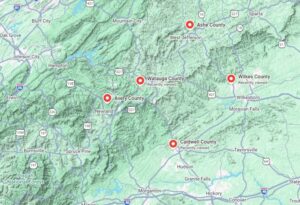
Living in the North Carolina High Country—specifically in areas like Boone, Blowing Rock, Banner Elk and West Jefferson — offers unparalleled natural beauty. However, this beauty comes with a scientific reality: we live in a high-elevation environment that often functions as a temperate rainforest. The frequent fog, heavy annual rainfall, and high humidity levels are not just atmospheric features; they are constant pressures acting on the structural integrity of your home.
For homeowners, moisture management isn’t just about comfort; it is a mechanical necessity. Atmospheric moisture constantly seeks equilibrium, meaning it is perpetually trying to move from the damp mountain air into the drier, conditioned spaces of your home. When this moisture meets cooler surfaces, such as windows or floor joists, it results in condensation—the primary catalyst for the most expensive repairs a mountain homeowner can face.
Living in the North Carolina High Country offers breathtaking views, but our elevation and frequent fog present unique challenges for homeowners. Chief among these is moisture management.

The High Country Climate Factor – Moisture Management
In regions like Boone, Blowing Rock, Banner Elk and West Jefferson we experience a “temperate rainforest” effect in certain pockets. This atmospheric moisture doesn’t just stay outside; it constantly seeks equilibrium with the air inside your home. When high humidity meets the cooler surfaces of a mountain home, the result is condensation, which serves as a catalyst for several structural issues.
1. Structural Integrity and Wood Rot
Most mountain homes are stick-built or log construction. Persistent moisture leads to wood decay fungi, which can compromise the structural integrity of floor joists, sill plates, and decking. In our area, “white rot” and “brown rot” are common findings during inspections when crawl spaces are not properly managed.
2. Indoor Air Quality and Mold
Moisture is the primary ingredient for mold growth. Beyond the physical damage to drywall and framing, mold spores significantly impact indoor air quality. For seasonal residents who leave their homes closed up for months at a time, “ghosting” or surface mold can take over an entire interior if humidity isn’t controlled.
Proper Mitigation Steps for Moisture Management
Mitigating water issues in the High Country requires a multi-layered approach that addresses both bulk water (rain/runoff) and vapor (humidity).
Crawl Space Encapsulation – Moisture Management
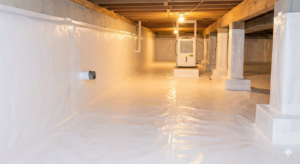
Traditional vented crawl spaces often fail in the mountains. During the summer, warm moist air enters the vents and hits the cool floor joists, causing “sweating.” A sealed, encapsulated crawl space with a dedicated dehumidifier is often the gold standard for protecting a home in this region.
Grade and Drainage – Moisture Management
Given the sloped terrain of the High Country, many homes act as “speed bumps” for water traveling down a mountain. Proper grading is essential to ensure water moves around the foundation rather than under it. This includes:
-
Gutter Extensions: Moving roof runoff at least 6–10 feet away from the foundation.
-
French Drains: Installing sub-surface drainage to intercept groundwater.
-
Swales: Creating landscape depressions to redirect surface flow.
Dehumidification and Airflow – Moisture Management
Interior humidity should ideally be kept between 30% and 50%. Using energy-efficient dehumidifiers and ensuring bathroom and kitchen fans vent directly to the exterior (not the attic) are critical daily steps for moisture control.
3. Call to Action (CTA) – Moisture Management
Professional Insight: If you’re buying a home or noticed a musty odor in your current residence, a professional inspection is the first step toward a dry, healthy home. Understanding the specific moisture profile of your property can save thousands in long-term structural repairs.
Schedule your Home Inspection HERE.
Check out more on Moisture Intrusion from NACHI HERE.