Introduction – The High Country Roof Guide
Living in the Blue Ridge Mountains offers beauty, but it also challenges your home’s roof. Between high-elevation winds, snow loads, and persistent freeze-thaw cycles, a “standard” roofing job doesn’t always cut it in our climate.
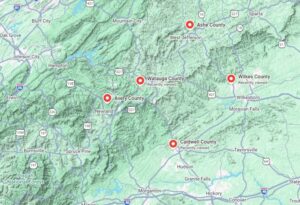
As a home inspector covering the Boone area and beyond, I see firsthand which systems thrive in our mountain environment and which ones struggle to stand up to the elements. If you are considering a roof replacement or simply want to understand your home’s current protection, here is what you need to know from an inspector’s perspective.
The Climate Factor – The High Country Roof Guide
Our region is exceptionally tough on building materials. We deal with:
-
Heavy Snow Loads: Accumulation can add massive weight to your roof structure.
-
High-Elevation Wind Shear: Ridge-top properties face gusts that can lift or tear shingles.
-
Ice Damming: When snow melts on the warmer parts of your roof and refreezes at the eaves, it forces water back up under your shingles.
A. Standing Seam Metal – The High Country Roof Guide
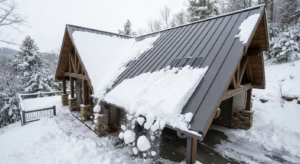
For many mountain homeowners, standing seam metal is the gold standard. Its slick, rigid surface is specifically engineered to shed heavy snow loads efficiently. Because the seams are raised above the level of the metal panels, it is virtually impervious to the moisture infiltration that plagues traditional shingles. When installed with proper underlayment, these roofs can easily last 50+ years.
B. Architectural Asphalt Shingles – The High Country Roof Guide
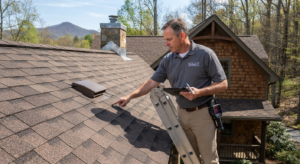
Architectural (or dimensional) shingles are the most common choice for a reason. They offer a great balance between cost and performance and are familiar to almost every local roofer. However, they rely heavily on your home’s attic ventilation. If your attic doesn’t “breathe,” heat builds up in the summer and moisture traps in the winter, which can drastically shorten the life of the shingles.
5. The ‘Invisible’ Essentials – The High Country Roof Guide
The material you see is often less important than the system beneath it. In the High Country, your roof is only as good as the system under the surface:
-
Ice and Water Shield: I always prioritize the installation of high-quality, self-adhering membranes along the eaves and valleys. This is your primary defense against the freeze-thaw cycle.
-
Proper Flashing: Poor flashing is the #1 reason I find leaks during inspections—especially around stone chimneys and where different roof planes meet.
-
Mechanical Integrity: I look for signs of stress, such as when shifting hillsides or ground movement put tension on roof conduits or eaves.
6. The Inspector’s Perspective – The High Country Roof Guide
When I evaluate a roof, I’m looking for more than just age. I’m looking at how the roof interacts with the environment. Is there moss growth due to shade from local hardwoods? Are there signs of mechanical wind damage? Is your ventilation system actually doing its job? Your roof does more than keep you dry—it protects your home’s structural integrity against the most extreme elements in North Carolina.
7. Conclusion – The High Country Roof Guide
Is your roof ready for the next season? Don’t wait for a leak to find out the condition of your home’s primary defense. If you’re concerned about your roof’s performance or are planning a renovation, reach out to Holler Home Inspections. I provide detailed, honest assessments to help you make informed decisions about your property.
To schedule your NC High Country home inspection visit us HERE
Visit InterNACHI’s website HERE for more information on roof coverings.