
Mountain Roofing NC High Country: Performance & Best Options
If you own a home in Boone, Blowing Rock, Banner Elk, or West Jefferson, you already know that mountain living comes with breathtaking views—and some of the most unforgiving weather in North Carolina.
At elevations ranging from 3,000 to over 5,000 feet, evaluating mountain roofing NC High Country performance isn’t just about curb appeal—it’s an investment in structural survival. Between hurricane-force winter wind gusts on ridge tops, high snow loads, rapid freeze-thaw cycles that trigger destructive ice damming, and intense high-altitude UV exposure, choosing the right material makes all the difference.
Here is a breakdown of how the most popular roofing materials perform under High Country conditions, along with recommendations on which options work best.
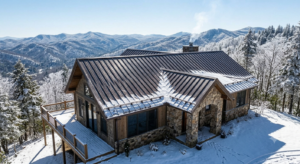
1. Standing Seam Metal Roofing: The Gold Standard – mountain roofing nc high country
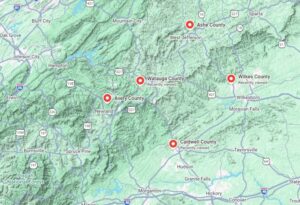
When walking or driving through Watauga, Ashe, and Avery counties, standing seam metal roofs appear everywhere on high-end homes and cabins—and for good reason.
-
Performance in Snow & Ice: Excellent. The slick surface allows snow and ice to slide off easily, preventing massive weight accumulation and lowering the risk of ice dams.
-
Wind Resistance: Outstanding. Concealed fasteners and interlocking panels routinely withstand wind gusts exceeding 130–140 mph.
-
Lifespan: 40 to 70+ years.
-
The Catch: Higher upfront cost (roughly 2x to 3x that of standard shingles). Snow guards are also essential over entryways and walkways to prevent sudden “snow avalanches” from dumping on people or decks.
-
High Country Verdict: Best Overall. If this is your “forever home” or a high-end rental property, standing seam metal provides unmatched peace of mind during winter storms.
2. Architectural Asphalt Shingles: Budget-Friendly & Proven – mountain roofing nc high country
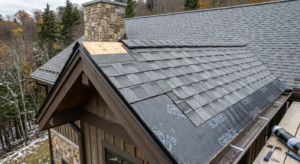
Architectural (or composite laminated) shingles remain the most common choice across the High Country region.
-
Performance in Snow & Ice: Fair to Good. Shingles retain snow longer due to their textured, granular surface. This acts as natural thermal insulation, but requires a clean, well-ventilated roof deck with a heavy ice-and-water shield membrane along the eaves to prevent ice dam leaks.
-
Wind Resistance: Good. Modern Class H architectural shingles are rated for winds up to 130 mph when installed with proper high-wind nail patterns.
-
Lifespan: 20 to 30 years in the mountains (shorter than low-elevation lifespans due to severe thermal expansion and contraction).
-
The Catch: Heavy snow retention can stress roof trusses if not engineered properly. High UV exposure at higher elevations degrades the asphalt granules faster over time.
-
High Country Verdict: Best Value. A great, cost-effective option—provided you upgrade to high-wind rated shingles and use synthetic underlayment with ice barrier protection along all eaves and valleys.
3. Synthetic Slate & Composite Cedar Shake: Authentic Style Without the Headaches – mountain roofing nc high country
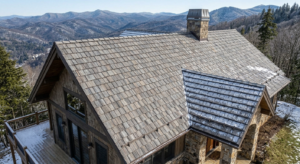
Natural wood shake and slate offer classic Appalachian architecture, but traditional cedar poses a high fire risk and degrades quickly under winter dampness. Synthetic composites solve these issues seamlessly.
-
Performance in Snow & Ice: Excellent. Non-porous materials prevent water absorption, meaning freeze-thaw cycles won’t crack them.
-
Wind & Impact Resistance: Superior. High impact ratings (Class 4) easily withstand falling branches and mountain hail. Class A fire rating protects against wildfire risks.
-
Lifespan: 50+ years with virtually zero maintenance.
-
The Catch: Premium price tag rivaling or exceeding standing seam metal.
-
High Country Verdict: Best for Aesthetics & HOA Compliance. Ideal for mountain developments in Blowing Rock or Banner Elk with strict rustic aesthetic codes.
4. Exposed-Fastener Metal Roofing (5V / Corrugated): The Budget Metal Option – mountain roofing nc high country
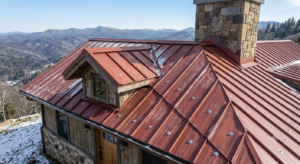
Common on rural barns, rustic cabins, and outbuildings across Ashe and Avery counties.
-
Performance in Snow & Ice: Good snow-shedding ability similar to standing seam.
-
The Catch: Screws are driven directly through the face of the metal panel. Over time, extreme thermal expansion and contraction in the High Country backing screws out or degrades the rubber washers, creating potential leak points every few feet.
-
High Country Verdict: Good for Outbuildings/Cabins on a Budget. Not recommended as a primary choice for long-term residential homes unless you plan on replacing neoprene washers every 10–15 years.
Roofing Performance Comparison – mountain roofing nc high country
| Material | High Country Lifespan | Wind Rating | Snow & Ice Handling | Maintenance | Relative Cost |
| Standing Seam Metal | 40 – 70+ years | Up to 140+ mph | Sheds automatically | Very Low | $$$$ |
| Synthetic Shake / Slate | 50+ years | Up to 110–130 mph | Good | Very Low | $$$$$ |
| Architectural Shingles | 20 – 25 years | Up to 130 mph | Retains snow; needs ice guard | Low–Moderate | $$ |
| Exposed-Fastener Metal | 20 – 30 years | Up to 100–120 mph | Sheds automatically | Moderate (Screw checks) | $$$ |
5 Critical High Country Roofing Details You Can’t Ignore – mountain roofing nc high country
No matter which material is selected, mountain roofs fail when detail work is overlooked:
-
Ice & Water Shield Underlayment: Standard felt paper isn’t enough. Self-adhering membrane should extend at least 3 to 6 feet up from the eaves, in all valleys, and around penetrations to protect against ice backing up under the material.
-
Snow Guards: On metal roofs, snow slides off in massive sheets. Installing snow pads or snow rails over doors, gutters, decks, and walkways is mandatory for safety and structural protection.
-
Attic Ventilation: Cold roofs prevent ice dams. Proper ridge-and-soffit ventilation keeps the roof deck temperature closer to the outside air, preventing heat loss from melting snow prematurely and causing eave ice jams.
Final Recommendation – mountain roofing nc high country
-
For maximum longevity and worry-free winters: Choose Standing Seam Metal.
-
For luxury timber-frame or rustic mountain designs: Choose Synthetic Composite Shake/Slate.
-
For a solid balance of affordability and performance: Choose High-Wind Architectural Shingles with an upgraded ice-and-water barrier.
For more information on Roof Coverings related to Home Inspections, visit our Website HERE
Visit us HERE for Services and Pricing.
Read more on InterNACHI roof coverings HERE