Buying a Home on a Mountain Slope in the NC High Country
Living on the Edge: What to Know Before Buying a Home on a Mountain Slope
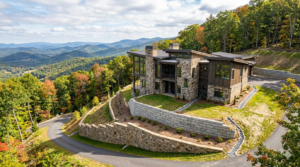
There is no denying the allure of mountain slope living. Waking up to panoramic views of the Blue Ridge, crisp high-altitude air, and a sense of privacy high above the valley floors is a dream shared by many homebuyers. However, building or buying a structure that defies gravity comes with a unique set of challenges. When a home is perched on a steep hillside in terrain like Boone, Banner Elk, Blowing Rock or West Jefferson, the land itself behaves differently than a flat lot.
At Holler Home Inspections, we routinely evaluate properties nestled in rugged terrains. While these properties are visually stunning, they require an elevated level of due diligence. Failing to recognize the warning signs of slope instability, structural movement, or poor hydrological management can turn your mountain sanctuary into a costly financial nightmare. Before you fall in love with the view, here are the critical engineering, structural, and environmental factors you must evaluate when buying a home on a mountain slope.
1. Foundation and Structural Engineering Dynamics – buying a home on a mountain slope
A foundation on flat land distributes the weight of a home vertically straight down into the earth. On a steep slope, the foundation must resist both vertical loads and lateral (downhill) pressures. Hillside homes typically utilize highly specialized foundation designs, each with its own vulnerabilities:
-
Step Foundations: Concrete foundations designed to follow the slope of the hill like a set of stairs. Inspectors look closely at the corners and transitions of these steps, as poor engineering can lead to differential settling and structural cracking.
-
Piling or Stilt Foundations: Common on ultra-steep grades, these homes rest on steel, concrete, or heavy timber piers anchored deeply into bedrock. While they offer incredible views, the exposed subfloor structures must be evaluated for wood rot, pest infestation, steel corrosion, and seismic bracing compliance.
-
Cut-and-Fill Foundations: This involves excavating a flat bench out of the hillside (the cut) and using that soil to extend the flat area outward (the fill). The primary danger here is if the fill soil was not properly compacted, causing the downhill section of the home to slowly sink or slide.
2. Soil Stability, Erosion, and Retaining Walls – buying a home on a mountain slope
When you own a home on a slope, you don’t just buy the house; you buy the integrity of the earth beneath it. Gravity is constantly trying to pull the top layers of soil downhill—a process accelerated by heavy rainfall, freezing and thawing cycles, and vegetation removal.
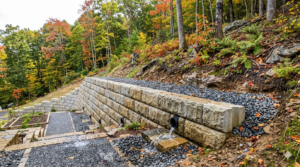
Retaining walls are the unsung heroes of mountain properties. They hold back tons of earth to keep your home or driveway stable. During a professional home inspection, retaining walls receive rigorous scrutiny. We look for leaning, bulging concrete, bowing timbers, or a lack of weep holes. A retaining wall that is failing or lacks proper drainage channels can cost tens of thousands of dollars to replace and represents an immediate threat to the structural safety of the home.
3. Hydrology and Water Management: The Ultimate Test – buying a home on a mountain slope
Water is a hillside home’s greatest enemy. When rain falls on a mountain, it flows downhill. If a home is sitting directly in that path, it acts as a dam unless water management systems are flawlessly executed.
A proper inspection will check for advanced drainage solutions, including:
-
Swales and Berms: Contoured ditches and mounds that redirect incoming surface water around the perimeter of the home rather than allowing it to pool against the foundation.
-
Curtain Drains / French Drains: Subsurface trenches filled with gravel and perforated pipes designed to intercept underground water migrating down the slope and channel it safely away.
-
Gutter Downspout Extensions: On a slope, allowing downspouts to dump water directly at the foundation corners can quickly liquefy the supporting soil. Water must be piped cleanly away into a designated splash block or storm runoff management system far down the slope.
🚩 Inspector’s Red Flag: Look out for signs of “creeping” soil, such as trees with trunks that curve upward (called pistol-butting), tilted fence posts, or cracks in the soil. These indicate that the upper layer of soil is actively shifting downhill.
4. Specialized Utility Challenges – buying a home on a mountain slope
Bringing utilities to a mountain slope is significantly more complex than standard municipal hookups. Buyers should always pay special attention to two primary systems:
Septic Systems on Slopes – buying a home on a mountain slope
If the home relies on a private septic system, a steep grade adds serious complexity. Traditional gravity-fed systems require a relatively flat, open area for the drain field. On a slope, the effluent can reach the surface too quickly without being properly filtered by the soil, resulting in environmental hazards. Many slope properties require expensive alternative systems, such as mound systems or engineered pump systems that force waste uphill to a suitable treatment zone. Testing the pump and reviewing the permitted design layout is absolutely non-negotiable.
Driveways and Vehicle Access – buying a home on a mountain slope
A steep, winding driveway might look charming in the summer, but it can become impassable during winter freezes or heavy torrential downpours. Furthermore, local fire departments have strict regulations regarding maximum allowable driveway grades. If a driveway is too steep, heavy emergency response vehicles may not be able to reach your home in an emergency.
The Critical Importance of a Professional Hillside Inspection – buying a home on a mountain slope
Standard home inspections often do not cover deep geological evaluation, but an experienced inspector who understands mountain terrains knows exactly how to read the house for warning signs. At Holler Home Inspections, we examine the convergence of structural alignment and environmental realities. We check the interior walls for drywall racking, verify window and door functionality (which bind when a house begins to lean), and analyze the exterior grades to assess if your investment stands solid for decades to come.
If the visual clues point to active movement or structural distress, we always recommend consulting with a licensed structural or geotechnical engineer to conduct soil borings and structural stabilization plans before finalizing your purchase.
Protect Your Mountain Dream – buying a home on a mountain slope
Before you sign the closing papers on your mountain paradise, make sure the ground beneath you is as rock-solid as your investment. Contact Holler Home Inspections today to schedule a comprehensive, terrain-aware structural evaluation designed specifically for unique mountain properties. Visit us at hollerhomeinspection.com to book your peace of mind. This is what to consider when buying a Home on a Mountain Slope in the NC High Country!
Visit our website HERE for more information. And schedule your Home Inspection HERE.
More about Homes on Mountain Slopes found HERE.