Home Inspection NC High Country – Why You Must Attend Your Home Inspection in the NC High Country
Buying a home in the North Carolina High Country is an exciting milestone. Whether you are looking at a
historic cabin in Valle Crucis, a modern timber-frame home overlooking Boone, a vacation rental property in
Banner Elk, or a historic cottage in Blowing Rock, the mountain terrain offers unmatched beauty. However, it
also introduces unique structural, environmental, and mechanical conditions that you won’t encounter in flatter
regions of the state. Home Inspection NC High Country
When you schedule a home inspection, it is easy to treat it as just another item to cross off your closing
checklist. You might think, “I will just read the PDF report when the inspector sends it over.” While a
comprehensive digital report with photos is invaluable, it cannot replace the experience of physically walking
through the property with your inspector. Attending your home inspection in the NC High Country is one of the
smartest steps you can take to secure your real estate investment. Home Inspection NC High Country
1. Deciphering Mountain-Specific Conditions on Site – Home Inspection NC High Country
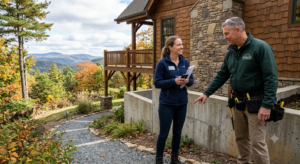
High Country homes face extreme weather, heavy winter snows, freeze-thaw cycles, and steep topography.
These localized challenges require specialized construction and maintenance strategies. By being present,
you can look directly at these elements while your licensed inspector breaks them down:
Steep-Slope Foundations & Drainage: Properties in Boone, Blowing Rock, and Banner Elk often sit on
severe slopes. Attending allows you to look under decks and crawlspaces to see how surface water runoff
and retaining walls manage the mountain’s natural drainage patterns. Home Inspection NC High Country
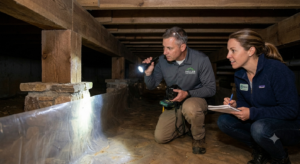
Crawlspace Moisture & Microclimates: High humidity levels in western North Carolina make crawlspace
performance critical. Your inspector can show you exactly how the vapor barrier, insulation, or
encapsulation system is holding up against mountain dampness.
Roofing & Decking Wear: High winds and heavy snow loads impact roofs and multi-level mountain
decks. Seeing the wear firsthand helps you contextualize how many years of service life remain. Home Inspection NC High Country
2. Differentiating Minor Maintenance from Major Structural Concerns
– Home Inspection NC High Country
Reading a home inspection report in black-and-white can sometimes look intimidating. A long list of findings
might make a perfectly sound house seem like a money pit. When you are on-site, your inspector can provide
crucial context that a printed document cannot fully convey. Home Inspection NC High Country
For example, seeing a small area of localized water staining on a ceiling might sound alarming in text. On-site,
your inspector can test it with a moisture meter right in front of you, showing you whether it is an active,
ongoing leak or an old, dry stain from a roof repair made years ago. This immediate clarity prevents
unnecessary panic and helps you keep your perspective realistic. Home Inspection NC High Country
3. A Free Masterclass in Operating Your New Mountain Home
– Home Inspection NC High Country
Every home operates as an interconnected network of mechanical systems, but High Country properties
frequently feature specialized utility configurations. Attending the inspection gives you a hands-on tutorial on
how to run your specific household efficiently:
Main Water Shut-Off Locations: If a winter freeze hits West Jefferson, you need to know exactly where your main water valve is located to protect your plumbing. Your inspector will show you the exact lever or
meter pit.
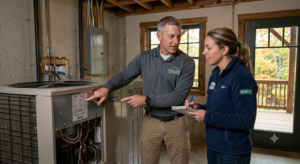
Heating & Auxiliary Systems: Mountain homes rely heavily on heat pumps with auxiliary heat strips,
wood-burning stoves, or propane gas logs. Your inspector will explain how to operate these safely and
manage your energy costs through freezing temperatures.
Private Well & Septic Layouts: Many mountain homes utilize private wells and septic systems rather than
municipal utilities. Walking the grounds allows you to identify the physical location of your well head and
septic tank field lines.
Pro Tip for High Country Buyers: Do not hesitate to ask questions during the walk-through. A great
inspector is there to educate you, not just audit the house. Understanding how your home breathes,
heats, and drains is the key to stress-free mountain living. Home Inspection NC High Country
4. Creating an Actionable, Stress-Free Negotiating Strategy
– Home Inspection NC High Country
Real estate markets in Boone, Blowing Rock, and West Jefferson move quickly, and the due diligence period
can feel compressed. When you attend the inspection, you walk away with a clear, realistic priority list of what
truly needs immediate attention. Home Inspection NC High Country
Instead of waiting days to interpret a written report with your real estate agent, you will already know which
items are safety hazards or structural defects, and which ones are simple weekend DIY fixes. This firsthand
knowledge puts you in a highly confident position during negotiations, allowing you to ask the seller for
meaningful repairs or price concessions based on clear visual evidence. Home Inspection NC High Country
Conclusion: Invest the Time to Protect Your Investment
– Home Inspection NC High Country
A property in the North Carolina mountains is a wonderful asset, but its structural integrity requires specialized
attention. By prioritizing and attending your home inspection in the NC High Country, you convert a standard
transaction report into a highly customized, empowering owner’s manual. Home Inspection NC High Country
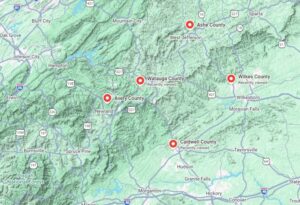
Before you sign your closing disclosures in Watauga, Ashe, or Avery County, make sure you have walked the
property with a trusted professional who knows how the local climate, terrain, and construction practices
intersect. It is the single best way to ensure your piece of the High Country remains a safe, sound haven for
decades to come. Home Inspection NC High Country
For more information on home inspections or to schedule a thorough independent home inspections, visit our website HERE.
Check out more on home inspections and our certified credentials HERE.